How to Choose the Best Heat Sealing Tape for Packaging

Time:2026-10-18 Author:Henry
0%

Choosing the right Heat Sealing Tape can determine whether a package survives filling, transport, storage, and final delivery. The decision involves more than adhesive strength. Film structure, sealing temperature, line speed, surface energy, and recycling goals all matter.

Industry evidence supports this careful approach. The Flexible Packaging Association’s State of the Flexible Packaging Industry report places the United States flexible packaging market at roughly $39 billion in annual sales. That scale reflects intense demand for lightweight, protective packaging. Smithers’ The Future of Global Packaging to 2028 also identifies sustainability, e-commerce protection, and material efficiency as major packaging influences. These trends are changing how converters evaluate sealing materials.

A practical selection process should begin with the actual packaging line. A tape that performs well on polyethylene may bond poorly to coated paper or metallized film. Test samples under real pressure, temperature, dwell time, and humidity. Small details matter, including a wrinkled film edge or a dusty sealing jaw. There is no perfect tape.

ASTM F2029 provides guidance for producing heat seals, while ASTM F88 supports seal-strength testing. These standards improve comparability, but laboratory results cannot replace production trials. That limitation is easy to overlook. A reliable choice balances bond strength, application temperature, aging performance, machinability, and end-of-life requirements. This guide explains how to compare those factors and avoid selecting a tape based only on price or a supplier’s headline specification.
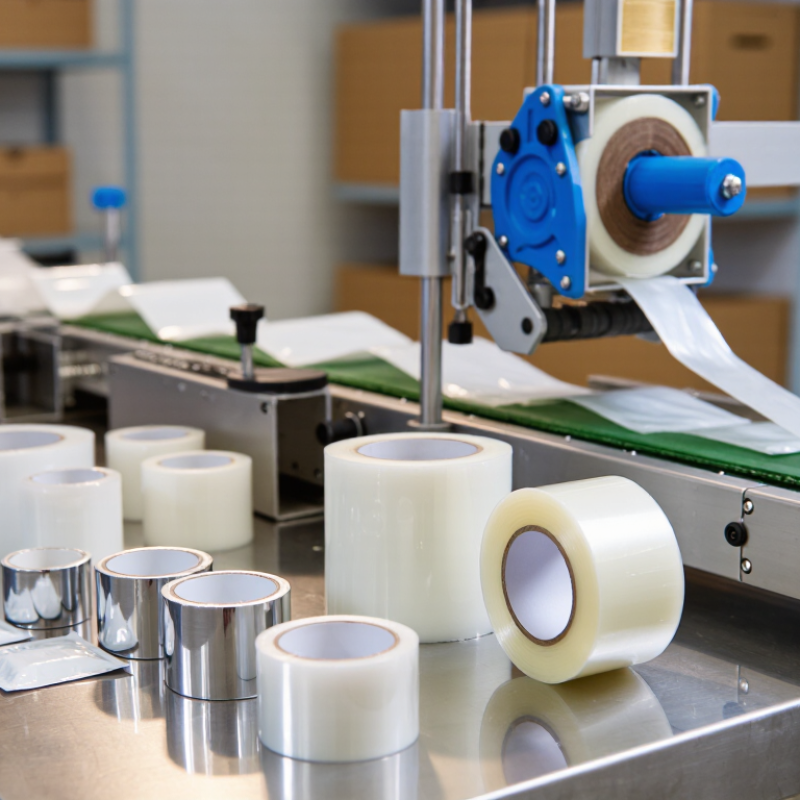
How to Choose the Best Heat Sealing Tape for Packaging

Packaging Heat Sealing Tape: Purpose, Structure, and Key Functions

Packaging Heat Sealing Tape: Purpose, Structure, and Key Functions

Choosing heat sealing tape starts with understanding its structure. Most products combine a backing layer, heat-activated adhesive, and release liner. The backing provides dimensional stability. The adhesive melts within a defined temperature range, then bonds as pressure and cooling complete the seal. Some constructions use polyester or paper backings, while others use multilayer films for stronger moisture resistance.

The tape must match the package material. A tape designed for coated paper may fail on polyethylene film. Check sealing temperature, dwell time, pressure, peel strength, and storage conditions. On a production line, I would test a sealed pouch after bending, stacking, and temperature cycling. Visual appearance is useful, but it is not enough. The seal should resist channel leaks and peel consistently across the package width.

Market data also shows why selection deserves care. Grand View Research estimated the global packaging tapes market at approximately 20.4 billion dollars in 2023, with continued growth through 2030. Smithers’ sustainable packaging research highlights rising pressure to reduce material use and improve recyclability. That pressure can create a difficult trade-off: thinner tape may lower material consumption, but it can reduce handling tolerance. Lab results can mislead. Real packaging lines contain dust, uneven pressure, and rushed operators. A practical choice balances adhesion, heat stability, application speed, and end-of-life requirements.

Identify the Packaging Materials and Sealing Conditions Involved

Choosing the best heat sealing tape starts with the package, not the tape roll. Identify every layer, such as kraft paper, coated film, polyethylene, foil, or laminated board. Check whether the surface is dusty, waxed, fibrous, or slightly oily. These details control adhesion and seal strength. A tape that works on smooth film may peel from rough corrugated paper. Ask how the package will be handled. Is it folded, squeezed, chilled, or exposed to sunlight? I have seen strong tape fail because carton dust was never removed. That mistake is easy to repeat.

Record sealing conditions before comparing products. Note the sealing temperature, pressure, dwell time, and application speed. For manual work, temperature may vary between operators. That variation matters. Cold storage can make adhesive layers less flexible, while hot warehouses can soften them. Measure the actual surface temperature, not only the machine setting. Test filled packages, because content weight changes joint tension. Leave samples for 24 to 48 hours, then check peeling, lifted corners, and fiber tear. A quick first impression can mislead.

Tips: Clean and dry the sealing area. Match tape width to the joint. Use a small trial batch first. Test at the lowest practical temperature. Record failures with photos and batch details. If the tape seals well only after heavy pressure, rethink the material match. I would also repeat testing after transport simulation. Laboratory success is not always warehouse success.

Compare Adhesive Types, Temperature Ranges, and Bond Strength

Choosing heat sealing tape starts with the adhesive, not the color or roll size. Acrylic adhesives usually offer strong aging resistance and cleaner performance on smooth films. Rubber-based adhesives often grab faster, especially on corrugated surfaces. Silicone systems tolerate demanding temperatures, but they can cost more and bond differently.

According to Grand View Research, the global packaging tape market was valued at about $23.74 billion in 2023. That scale reflects how small adhesive choices can affect large production lines.

Temperature range needs practical testing. A tape may withstand a high peak temperature but fail during repeated heating and cooling.

Check the actual sealing-jaw temperature, dwell time, film type, and storage conditions. Some acrylic systems perform across roughly -20°C to 120°C, while specialized products tolerate higher short-term exposure. These figures are not universal. Ask for technical data, then test a sealed pouch after bending, stacking, and refrigeration.

Bond strength also needs a clearer definition. Peel adhesion, shear resistance, and tensile strength measure different failures. ASTM D3330 peel testing can compare adhesion, but it cannot predict every packaging condition.

Smithers’ flexible packaging research continues to highlight lightweight films and higher-performance structures as key market trends. That creates a difficult trade-off: stronger bonding may improve seal security, yet excessive adhesion can tear thin films during opening.

In my own evaluations, a tape that felt secure by hand sometimes failed after humidity exposure. The mistake was trusting touch alone.

Evaluate Tape Width, Thickness, Durability, and Application Methods

How to Choose the Best Heat Sealing Tape for Packaging

Choosing heat sealing tape begins with the package, not the catalog. Measure the gap first. For narrow pouches, a 12–20 mm width can reduce overlap and material waste. Wider tape suits uneven edges, but it may wrinkle around tight corners. Thickness affects handling, heat transfer, and resistance to punctures. Thin tape heats quickly, while thicker tape may need longer dwell time. That trade-off is easy to underestimate.

Durability should match the package’s real journey. Check peel strength after sealing, then inspect the seal after bending, stacking, and mild abrasion. A tape that looks secure on a clean bench may fail when dust or moisture reaches the seam. Small details matter. During practical trials, record sealing temperature, pressure, dwell time, and cooling time for every sample. These figures make quality checks repeatable.

Application method also changes the correct tape choice. Hand sealing works for small batches, but pressure must remain consistent. Impulse sealers are useful for flexible films and short production runs. Continuous band sealers require stable tape tracking and controlled speed. Test the actual film, tape width, and machine together before scaling. I once treated a manufacturer’s temperature range as a final setting; it was only a starting point. Recheck seals after 24 hours, especially when packaging is stored in warm or humid areas.

How to Choose the Best Heat Sealing Tape for Packaging: Width, Thickness, Durability, and Application Methods

Tape Construction Typical Width Typical Thickness Recommended Sealing Temperature Durability Profile Suitable Packaging Materials Application Method Best Use Case Selection Considerations
Polyolefin-coated paper tape 12–25 mm 70–120 microns 110–150°C Medium Paper bags, kraft pouches, light paperboard packs Impulse sealer or continuous-band sealer Dry goods and lightweight retail packaging Choose a wider tape for uneven paper surfaces; verify that the coating is compatible with the bag material.
Polyester film heat-sealing tape 12–38 mm 50–100 microns 140–190°C High Polyester laminates, coated films, flexible plastic packaging Impulse sealer, band sealer, or heated bar Packages requiring good tensile strength and dimensional stability Useful where abrasion resistance matters; avoid excessive heat that can distort thin films.
Polypropylene-based sealing tape 15–50 mm 40–90 microns 130–180°C Medium to High Polypropylene bags, woven polypropylene sacks, laminated films Hot-bar sealer or continuous-band sealer General-purpose packaging and moderately demanding shipping packs Match the tape to the polypropylene surface; wider tape can improve load distribution on woven materials.
Polyethylene-compatible sealing tape 12–38 mm 50–120 microns 120–170°C Medium Low-density polyethylene and high-density polyethylene films Impulse sealer, heated jaw, or band sealer Flexible bags, liners, and protective plastic packaging Use controlled temperature and dwell time because polyethylene films may shrink, soften, or puncture when overheated.
Foil-laminate sealing tape 15–50 mm 70–150 microns 140–200°C High Aluminum foil laminates, high-barrier pouches, metallized structures Heated bar, continuous-band sealer, or pneumatic sealing jaw Moisture-, light-, and oxygen-sensitive products Confirm that the sealing layer, not only the foil layer, is heat compatible; thicker structures may require longer dwell time.
Hot-melt adhesive sealing tape 12–50 mm 80–200 microns 100–160°C Medium to High Paper, coated paper, nonwoven materials, selected plastic films Hot-air applicator, heated roller, or heated sealing bar Reclosable or tamper-evident packaging applications Adhesive performance depends on surface cleanliness, pressure, temperature, and cooling time.
High-temperature silicone sealing tape 10–25 mm 100–250 microns 180–230°C High Heat-resistant films, coated fabrics, specialty laminates Heated bar, impulse sealer, or specialty sealing equipment Repeated sealing cycles and demanding thermal environments Higher temperature capability can improve process stability, but equipment settings must still follow the packaging film specification.
Reinforced filament sealing tape 25–75 mm 100–180 microns Typically used with a heat-sealable facing at 120–180°C Very High Heavy-duty sacks, multiwall bags, reinforced flexible packaging Hot-bar sealer or industrial continuous sealer Heavy contents, rough handling, and long-distance transport Select a width that covers the seam adequately; reinforcement improves tear resistance but may require greater sealing pressure.

Note: Temperature ranges are typical starting points for trials. Final settings depend on the tape structure, packaging film, sealing-jaw pressure, dwell time, line speed, and equipment design. Always validate seal strength and package integrity under actual production and storage conditions.

Select the Best Heat Sealing Tape for Specific Packaging Needs

Selecting heat sealing tape starts with the package, not the tape roll. Film type, coating, temperature, and line speed determine performance. Start with the seal.

For polyethylene pouches, choose a tape with strong adhesion and controlled heat activation. Paper-based packs may need lower temperatures to prevent browning or fiber distortion. If cartons enter cold storage, test peel strength after chilling. Moisture can weaken an attractive seal. Smithers’ Future of Packaging to 2028 report estimates the global packaging market will approach 1.2 trillion dollars by 2028. That growth increases pressure for faster, lighter, and more recyclable packaging. A tape that seals quickly but contaminates the recycling stream may create a poor trade-off.

Match the tape to real production conditions. Record sealing temperature, pressure, dwell time, and peel results on the actual packaging line. PMMI’s 2024 Packaging Compass report, based on input from more than 100 packaging professionals, identifies automation and sustainability as major investment priorities. This makes consistent application important, especially on high-speed equipment. Ask for technical data covering seal temperature, bond strength, storage limits, and aging behavior. Do not rely only on a supplier’s headline number. Small differences matter. Test printed surfaces, folds, dust, and uneven tension, because laboratory samples are usually cleaner than production materials. I would also challenge one common assumption: the strongest tape is not always the best choice. Excessive adhesion can tear lightweight film and increase waste during opening.

How to Choose the Best Heat Sealing Tape for Packaging

Relative suitability scores from 1 to 5 based on common material properties and typical packaging requirements.

Low-temperature heat-activated tape is well suited to film packaging, while silicone-coated and PTFE-coated tapes are better choices for high-temperature processing and release applications. PET-based tape provides a balanced option when clean handling and dimensional stability are important.

FAQS

How should I choose a heat sealing tape adhesive?

Start with the package and film surface. Acrylic adhesives age well on smooth films. Rubber-based adhesives grab quickly on corrugated surfaces. Silicone adhesives suit demanding temperatures but may cost more. Test before deciding.

What temperature range should heat sealing tape handle?

Check the sealing-jaw temperature, dwell time, film type, and storage conditions. Some acrylic systems work around -20°C to 120°C. These figures are not universal. Repeated heating and cooling can expose weaknesses.

How can I test temperature performance?

Seal sample pouches under real machine settings. Bend, stack, and refrigerate them afterward. Inspect the seam for lifting or cracking. A high peak temperature alone proves little.

Does stronger adhesion always create a better package?

No. Strong adhesion can improve seal security, but it may tear thin films during opening. Peel, shear, and tensile strength describe different failures. Hand pressure is not enough.

What tape width suits narrow pouches?

A 12–20 mm width can reduce overlap and material waste. Wider tape helps uneven edges but may wrinkle at tight corners. Measure the gap first. Small measurements prevent avoidable waste.

How does tape thickness affect sealing?

Thin tape heats quickly and handles easily. Thicker tape may resist punctures but require longer dwell time. It can also slow heat transfer. This trade-off is easy to underestimate.

What durability checks should packaging teams perform?

Inspect seals after bending, stacking, and mild abrasion. Include dust and moisture when practical. Recheck samples after 24 hours. A clean bench can create false confidence.

Which application method is suitable for small production runs?

Hand sealing suits small batches, but pressure must remain consistent. Impulse sealers work well with flexible films. Continuous band sealers need stable tracking and controlled speed. Test the complete setup.

Which test information should be recorded?

Record sealing temperature, pressure, dwell time, cooling time, film type, and tape width. Keep results for each sample. Consistent records make quality checks repeatable.

Is a manufacturer’s temperature range a final machine setting?

No. Treat it as a starting point. Test the actual tape, film, and machine together. Warm or humid storage may change performance. I once trusted the listed range too much.

Conclusion

Choosing the right Heat Sealing Tape is essential for creating secure, consistent, and durable packaging closures. The selection process begins by understanding the tape’s structure and purpose, including its backing material, adhesive layer, heat activation requirements, and compatibility with packaging films, coated papers, laminates, or other substrates. Sealing conditions such as temperature, pressure, dwell time, production speed, and equipment type should also be considered to ensure reliable performance.

Different adhesive types offer varying temperature ranges, bond strengths, flexibility, and resistance to moisture or handling stress. Buyers should compare tape width and thickness according to the package design, sealing area, and required protection level. Durability during storage, transport, and repeated handling is equally important, while application methods may range from manual use to automated packaging lines. By evaluating these factors together, businesses can select the most suitable Heat Sealing Tape for their packaging materials, operating conditions, product protection needs, and overall production efficiency.


Henry

Henry

Henry is a dedicated marketing professional with a profound expertise in the company's offerings. With years of experience in the industry, he possesses an impressive understanding of the market dynamics and consumer behaviors that drive success. Henry is committed to sharing his insights through......