Choosing the best Carrier Tape Sealing Tape in 2026 requires more than comparing prices or advertised peel strength. The right tape must protect sensitive components during transport, storage, and automated placement. It should also seal consistently across different carrier tape materials, pocket depths, and production speeds. A small weakness can create visible problems, such as lifted edges, dust entry, loose devices, or unstable peeling.
Dr. John H. Lau, a respected semiconductor packaging expert, has often stressed a practical principle: “Reliability must be designed into the package, not inspected into it.” That idea applies directly to Carrier Tape Sealing Tape. A dependable product needs controlled adhesive coating, stable release force, suitable transparency, and clean separation during pick-and-place operations. Operators should check sealing temperature, dwell time, peel behavior, and storage conditions. Laboratory data helps, but factory performance matters more.
This guide compares the key options expected to shape the market in 2026. It considers acrylic, rubber-based, and specialty adhesive systems. It also examines antistatic performance, humidity resistance, sealing-window tolerance, and compatibility with high-speed packaging lines. The best tape is not always the strongest tape. Excessive adhesion can slow peeling or damage delicate covers. Weak adhesion can expose components before use. That trade-off is easy to underestimate. Testing should include real carrier materials, actual equipment, and repeated production cycles. Even then, no selection is perfect. Unexpected temperature changes, dusty work areas, or inconsistent pressure may reveal weaknesses later. Careful validation remains essential.
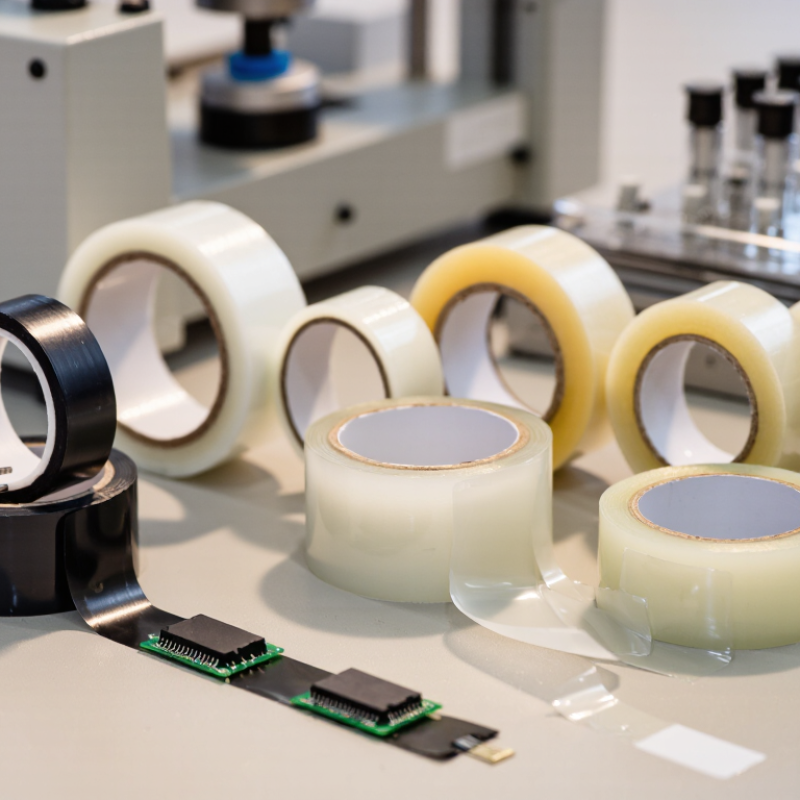
The best carrier tape sealing tape in 2026 depends on how reliably it protects components during storage and placement. Carrier tape is a formed pocket strip that holds tiny electronic parts. A cover tape closes each pocket from above. During sealing, controlled heat and pressure activate the tape’s adhesive layer. The bond must remain secure during transport, yet peel cleanly inside the placement machine. Too much force can lift components. Too little can expose them to dust or moisture.
SEMI’s 2024 World Fab Forecast tracks more than 1,400 semiconductor facilities and production lines worldwide. That scale increases demand for consistent packaging materials and stable high-speed sealing. Yole Group’s 2024 advanced packaging analysis also links packaging growth with AI and high-performance computing. These applications make tape performance less forgiving. In practical trials, engineers should check peel strength, sealing temperature, antistatic behavior, humidity resistance, and residue. Testing at one machine speed is not enough. I have seen a tape perform well in dry conditions, then peel unevenly after humid storage.
A suitable tape should match the carrier material, sealing window, component weight, and feeder design. Polycarbonate and embossed paper carriers may require different adhesive behavior. Follow IPC/JEDEC J-STD-033 practices when moisture-sensitive devices are involved. The “best” choice is therefore not the strongest tape. It is the tape that seals steadily, opens predictably, and protects parts without slowing production. That sounds simple, but real validation often proves otherwise.
The best choice depends on the carrier material, component weight, equipment, and storage conditions. No single tape works everywhere. Polyester backing offers stable thickness, good transparency, and reliable dimensional control. Test it again.
Polyester is widely selected for dimensional stability and consistent handling. Polypropylene may suit lighter packaging. Paper-based options can support sustainability goals, but humidity may affect sealing.
Acrylic pressure-sensitive adhesive often provides consistent bonding without added heat. It can work across many carrier surfaces. Check peel force after storage, not only immediately after sealing.
Heat-activated adhesive may provide stronger sealing under controlled temperature and pressure. Excessive heat can affect sensitive components or distort pockets. Small changes matter.
Paper carriers need even bonding without crushing fragile pockets. Polystyrene and polycarbonate may require different heat settings. Smooth PET surfaces can reduce adhesion, despite strong dimensional stability.
Small passive parts need steady sealing across narrow pockets. Larger connectors may need stronger holding force and vibration resistance. Moisture-sensitive components require controlled handling and stable seals.
Test the exact carrier material, pocket design, line speed, and sealing pressure. Measure peel force after heat aging and transport simulation. Inspect for residue, lifted edges, wrinkles, and distorted pockets.
Mono-material structures are receiving more attention in 2026. Actual recyclability depends on the complete package design, not the tape alone. The target sounds simple, but the package may disagree.
Dust, roller pressure, temperature drift, humidity, and operator handling can weaken production results. Laboratory data may not reflect long production runs. I sometimes overlook humidity early, so repeated trials remain necessary.
Choosing the best Carrier Tape Sealing Tape in 2026 requires more than comparing price or basic adhesion. This tape seals components inside carrier pockets while allowing reliable protection during handling, transport, and automated assembly. The ideal solution balances sealing strength with clean, controlled peelability, preventing component loss without creating excessive removal force. Common options may use different film structures, adhesive systems, and antistatic or dissipative properties, so material compatibility and ESD protection are essential considerations.
Selection should begin with the carrier tape material, component size, surface condition, and sealing equipment. A suitable tape must conform evenly, maintain stable adhesion across the required temperature and storage conditions, and release without residue or damage. Evaluating peel performance, seal consistency, dimensional stability, and ESD control through practical testing can help identify the right option. By matching tape construction to the packaging process and component sensitivity, manufacturers can improve reliability, reduce handling problems, and support efficient production.

 YONGJIA Electronic